Hawaiian shirts are known for their colorful patterns, relaxed fit, and distinctive all-over prints. While the finished garment may look simple, producing a high-quality Hawaiian shirt involves much more than printing a tropical pattern onto fabric.
From artwork preparation and fabric selection to printing, cutting, sewing, pattern matching, and quality inspection, every stage can affect the appearance and consistency of the finished shirt.
So, how are Hawaiian shirts made?
In this guide, we take you through the complete Hawaiian shirt manufacturing process and explain what clothing brands should consider when developing custom printed shirts.
1.Design and Artwork Development
The manufacturing process begins with the design.
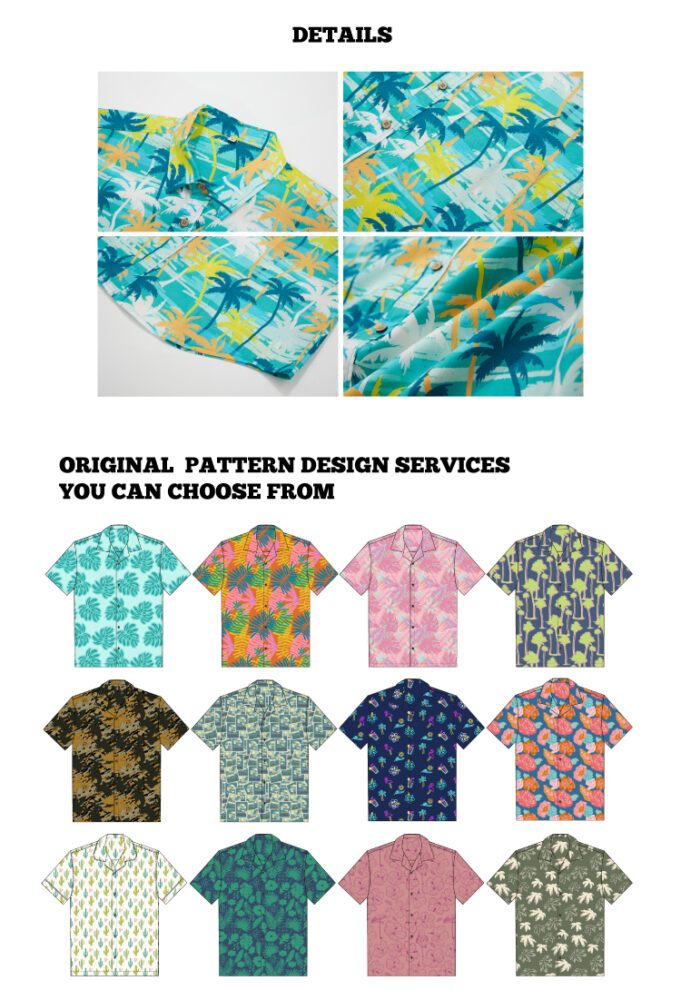
For custom Hawaiian shirts, brands may provide their own artwork, repeat patterns, illustrations, or design concepts. These designs are then prepared according to the fabric width, garment specifications, and selected printing method.
Hawaiian shirt designs can include:
- Tropical and floral patterns
- Palm leaves and botanical prints
- Fishing and ocean themes
- Surf-inspired graphics
- Holiday and seasonal artwork
- Geometric patterns
- Vintage illustrations
- Custom brand graphics
For all-over printed shirts, the artwork usually needs to form a repeatable pattern so that it can cover the fabric continuously.
The quality of the original artwork is particularly important. High-resolution files, accurate colors, and properly prepared repeat patterns help achieve better results during fabric printing.
2. Choosing the Right Fabric
Fabric selection is one of the most important decisions when manufacturing Hawaiian shirts.
The material affects not only how the shirt feels and drapes but also how the printed colors and details appear.
Common fabrics used for Hawaiian shirts include:
Polyester
Polyester is commonly used for all-over printed Hawaiian shirts, particularly when sublimation printing is required.
It offers good durability and can produce vivid colors and detailed patterns.
Rayon
Rayon is popular for Hawaiian and resort shirts because of its soft hand feel and fluid drape. It can create a lightweight, relaxed appearance suitable for warm-weather collections.
Cotton
Cotton offers a natural hand feel and good breathability. Different cotton constructions and weights can be selected depending on the desired style and product positioning.
Blended Fabrics
Cotton blends, polyester blends, and other blended fabrics can be developed to achieve a particular balance between hand feel, durability, print performance, and cost.
There is no single fabric that is best for every Hawaiian shirt.
The right choice depends on the target market, printing method, design, price positioning, desired hand feel, and intended use of the garment.
3. Fabric Testing and Sample Printing
Before moving into bulk production, the selected fabric and artwork should be tested together.
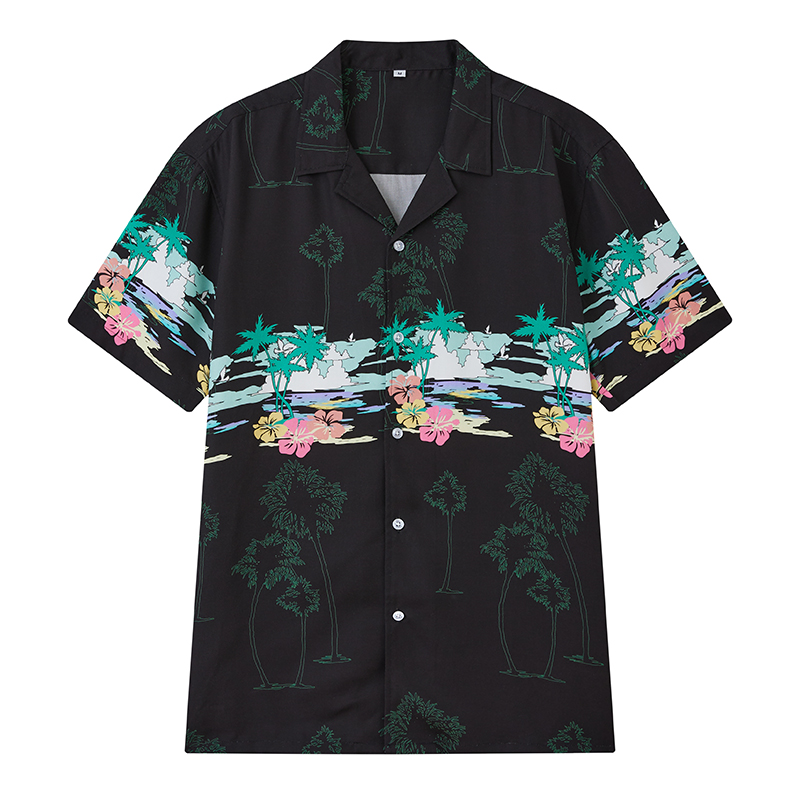
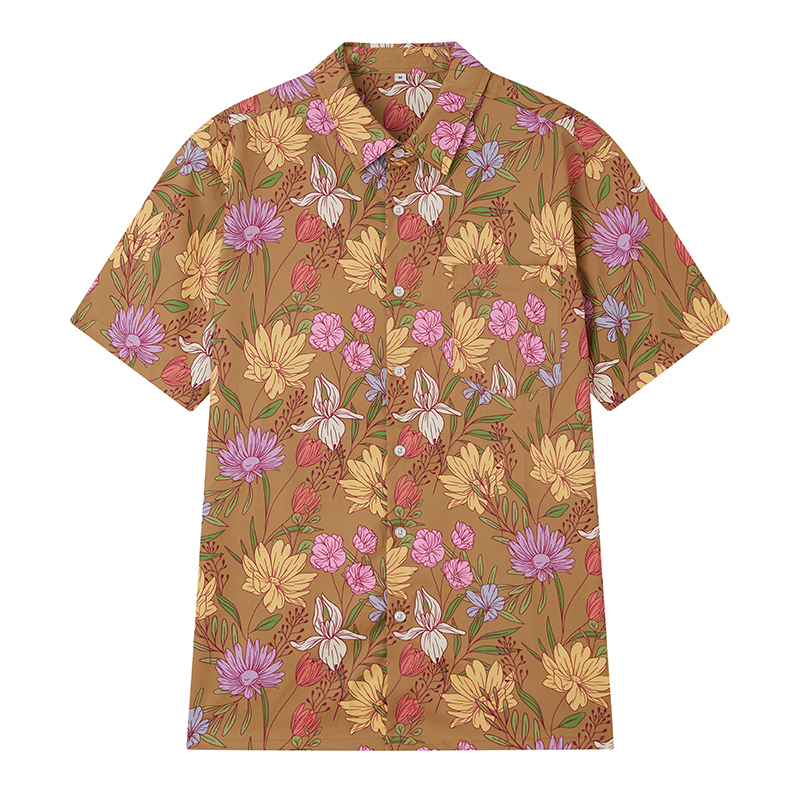
This is particularly important because the same artwork may appear different when printed on different fabrics.
Factors such as fiber composition, fabric construction, surface texture, and printing technology can influence:
- Color saturation
- Print sharpness
- Pattern details
- Color accuracy
- Fabric hand feel
- Overall appearance
For custom apparel brands, reviewing a print sample before bulk production can help identify potential color or artwork issues early in the development process.
4. Printing the Hawaiian Shirt Fabric
Printing is one of the most important stages of Hawaiian shirt manufacturing.
Unlike garments that only feature a small chest graphic, Hawaiian shirts often use all-over printed fabric, meaning the pattern covers most or all of the garment.
Several printing methods may be used depending on the fabric and design.
Sublimation Printing
Sublimation printing is commonly used for polyester fabrics.
The design is transferred into the polyester fibers using heat, allowing detailed patterns and strong colors to be produced without creating a heavy printed layer on the fabric surface.
It is particularly suitable for complex all-over designs.
Digital Textile Printing
Digital textile printing can reproduce detailed artwork, multiple colors, gradients, and complex patterns.
Depending on the printing system and fabric type, it can be used for cotton, rayon, and other textile materials.
Other Printing Methods
Additional textile printing methods may also be selected depending on the fabric composition, artwork, order quantity, and desired effect.
The important point is that fabric and printing technology should be considered together.
A printing method that performs well on one fabric may not produce the same result on another.
5. Fabric Inspection Before Cutting
Once the printed fabric is ready, it should be inspected before cutting begins.
The production team may check for issues such as:
- Printing defects
- Incorrect colors
- Fabric defects
- Pattern inconsistencies
- Stains or marks
- Fabric width problems
Identifying problems before cutting helps reduce unnecessary material waste and prevents defective fabric from entering later production stages.
For printed shirts, maintaining stable print quality throughout the fabric roll is particularly important.
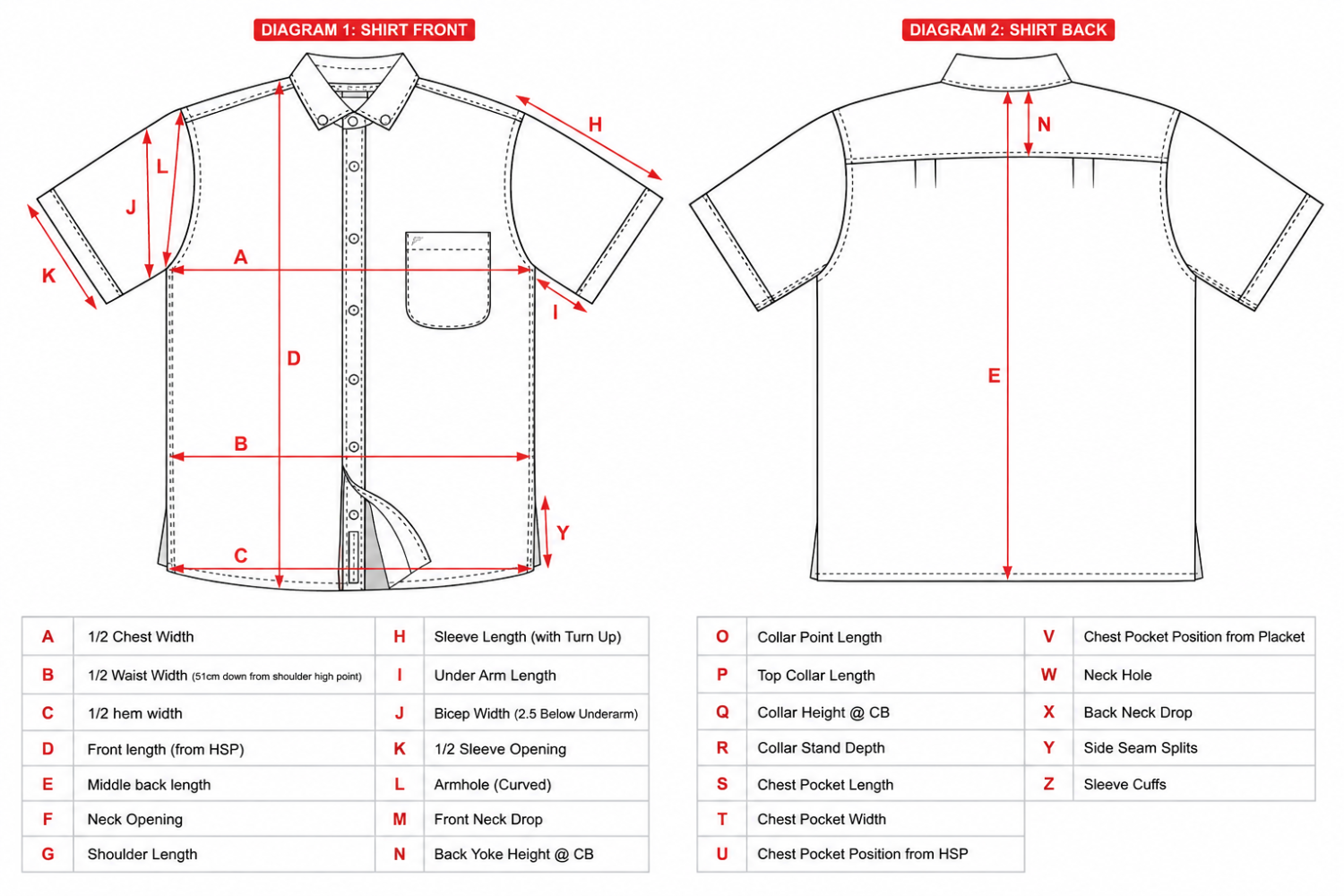
6. Pattern Making and Sizing
The next stage is creating or confirming the garment pattern.
A Hawaiian shirt pattern generally includes components such as:
- Front panels
- Back panel
- Sleeves
- Collar
- Collar stand, depending on the design
- Facing and other construction components
For OEM production, brands may provide their own measurements, tech packs, or physical samples.
For ODM projects, the manufacturer may help develop the shirt based on the brand’s target fit and design requirements.
Depending on the market, Hawaiian shirts can be developed in:
- Slim fit
- Regular fit
- Relaxed fit
- Oversized fit
Sizing should also be adapted to the target customer rather than simply using one standard size chart for every market.
7. Fabric Cutting
After the garment pattern is confirmed, the printed fabric is prepared for cutting.
Pattern pieces are arranged on the fabric according to the garment specifications and production requirements.
Cutting accuracy is important because incorrect cutting can affect:
- Garment measurements
- Pattern positioning
- Sewing accuracy
- Final appearance
- Production consistency
For Hawaiian shirts with large or directional prints, additional attention may be required when positioning the pattern pieces.
8. Pattern Matching
Pattern matching is one of the details that can distinguish a higher-quality printed shirt.
Because Hawaiian shirts often feature large and visually prominent patterns, misaligned prints can be noticeable.
Depending on the design and product requirements, manufacturers may pay particular attention to areas such as:
Front Placket
The print on the left and right front panels can be positioned to create a more continuous visual appearance when the shirt is buttoned.
Chest Pocket
For higher-quality shirts, the pocket pattern may be aligned with the pattern on the main front panel.
This can make the pocket appear visually integrated into the shirt.
Other Garment Areas
Pattern positioning may also be considered around seams, collars, or other visible areas depending on the design.
However, pattern matching requires additional fabric consumption and production time, so brands should confirm these requirements before production.
9. Sewing and Garment Construction
After cutting, the individual fabric pieces are assembled into a finished shirt.
The exact sewing sequence depends on the shirt construction, but typical stages include assembling the body panels, attaching the sleeves, constructing the collar, sewing the pocket, finishing the front placket, hemming, creating buttonholes, and attaching buttons.
At this stage, production quality should be monitored carefully.
Important details include:
- Stitch consistency
- Seam strength
- Collar shape
- Pocket positioning
- Sleeve construction
- Button placement
- Buttonhole quality
- Hem finishing
Even an excellent print cannot compensate for poor garment construction.
For this reason, both printing quality and sewing quality are important when evaluating a Hawaiian shirt manufacturer.
10. Adding Custom Branding
For clothing brands, manufacturing usually involves more than producing the garment itself.
Custom branding elements can also be added, such as:
- Main labels
- Size labels
- Care labels
- Woven labels
- Printed labels
- Hangtags
- Custom buttons
- Brand packaging
These details allow a standard printed shirt to become a finished product that represents the brand’s identity.
For OEM/ODM projects, branding specifications should ideally be confirmed during the product development stage.
11. Washing, Finishing, and Ironing
Depending on the fabric and production requirements, the finished garments may undergo additional finishing processes.
The shirts are then trimmed, cleaned, pressed, and prepared for final inspection.
Loose threads should be removed and the garment should be presented in its intended final shape.
This stage may appear simple, but proper finishing has a significant effect on the presentation of the finished product.
12. Quality Control
Quality control is one of the final and most important stages in Hawaiian shirt production.
A typical inspection may cover:
Printing
Check color consistency, pattern clarity, print defects, and overall appearance.
Measurements
Confirm that garment measurements remain within the approved tolerances.
Sewing
Inspect stitching, seams, collars, pockets, sleeves, hems, buttons, and buttonholes.
Pattern Positioning
Check important pattern-matching requirements when specified by the customer.
Workmanship
Look for loose threads, stains, fabric damage, or other visible defects.
Maintaining consistent quality becomes especially important when producing multiple sizes and larger quantities.
13. Packing and Shipment
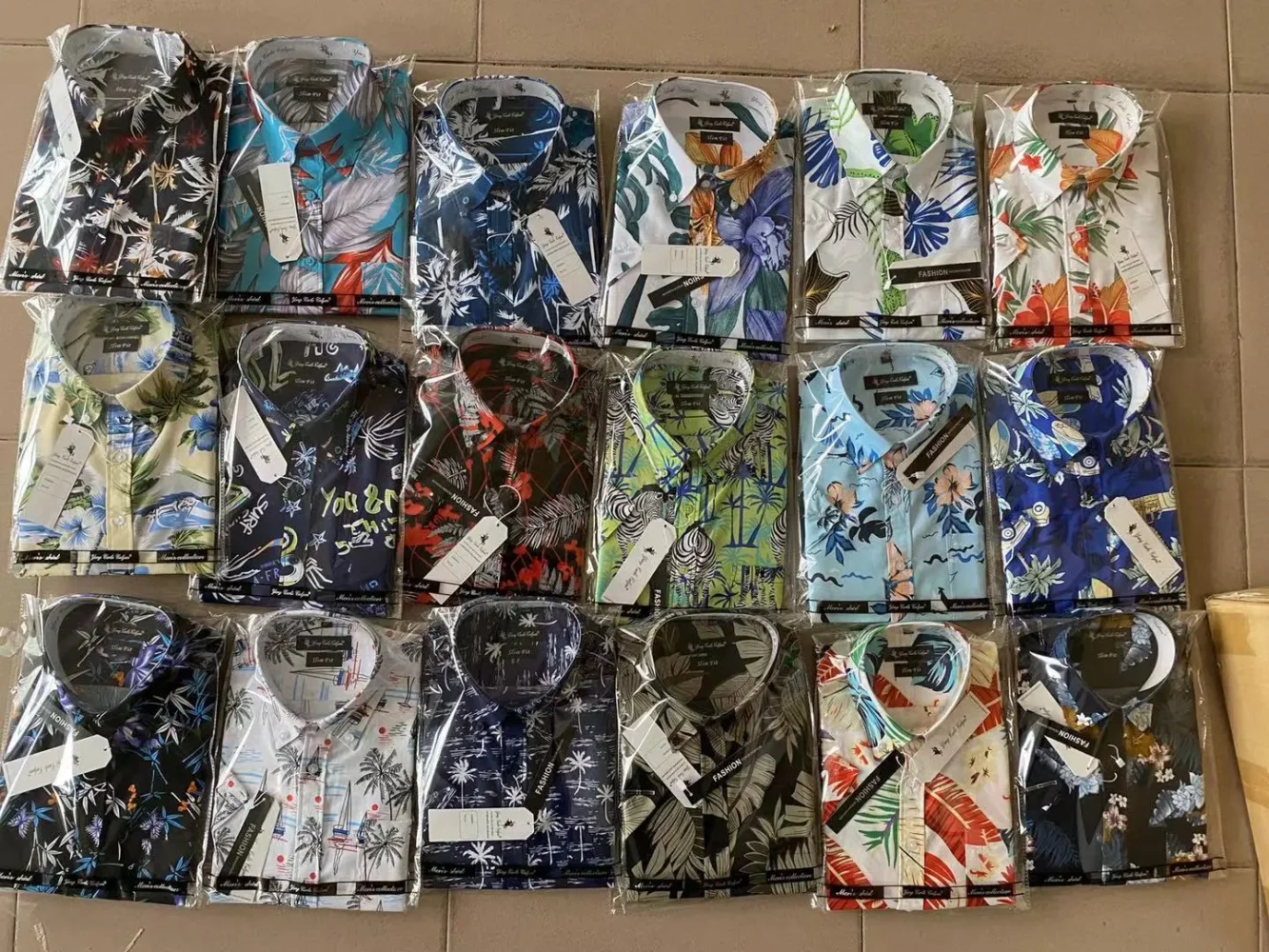
After final inspection, approved shirts are folded and packed according to the customer’s requirements.
Packaging options can include:
- Individual polybags
- Custom packaging
- Size stickers
- Hangtags
- Barcode labels
- Cartons with customized shipping marks
The finished order can then be prepared for international shipment.
How Long Does It Take to Manufacture Custom Hawaiian Shirts?
Production time depends on factors such as order quantity, fabric availability, printing method, design complexity, sample revisions, and customization requirements.
A custom apparel project normally includes two main stages:
Sampling:
A sample is developed so the brand can evaluate the fabric, printing, fit, construction, and overall appearance.
Bulk Production:
After the sample and production details are approved, the manufacturer can proceed with fabric preparation, printing, cutting, sewing, inspection, and packing.
Brands should allow sufficient time for sampling and revisions before setting their final launch or delivery schedule.
What Should Brands Check Before Bulk Production?
Before approving a custom Hawaiian shirt for production, brands should carefully review:
- Fabric composition and hand feel
- Fabric weight
- Print colors
- Print scale
- Artwork positioning
- Shirt measurements
- Fit
- Collar construction
- Pocket position
- Buttons
- Labels
- Sewing quality
- Pattern matching requirements
- Packaging
A detailed sample approval process helps reduce misunderstandings and creates a clear production standard for both the brand and manufacturer.
Why Manufacturing Quality Matters for Printed Shirts
With Hawaiian shirts, customers immediately notice the print.
However, a high-quality printed shirt requires more than vibrant colors.
The fabric, print reproduction, cutting accuracy, pattern matching, sewing, fit, finishing, and quality control all work together to determine the final product.
This is particularly important for clothing brands that want consistent quality across multiple designs, sizes, and repeat orders.
Custom Hawaiian Shirt Manufacturing at Easypromos
Easypromos specializes in custom printed apparel manufacturing, with extensive experience in printed shirts and Hawaiian-style apparel.
With approximately 10 years of experience in printed shirt production, we support clothing brands with custom printing, fabric selection, custom fit and garment construction, OEM/ODM development, sampling, and bulk production.
Our custom apparel capabilities include:
- Custom Hawaiian shirts
- Custom printed shirts
- Custom printed shorts
- Printed polo shirts
- Flannel shirts
- Custom fabric and print development
- OEM/ODM manufacturing
- Custom labels and packaging
For growing brands and smaller collections, we support a low MOQ starting from 100 pieces per style, making it possible to develop new designs without committing immediately to very large production quantities.
We focus particularly on print reproduction, color performance, fabric consistency, and garment construction to help brands achieve stable results from sampling through bulk production.
Final Thoughts
So, how are Hawaiian shirts made?
The process typically starts with artwork and fabric selection, followed by sample printing, fabric production, inspection, pattern making, cutting, pattern matching, sewing, finishing, quality control, and packing.
For clothing brands, understanding this process makes it easier to communicate with manufacturers, evaluate samples, control quality, and plan production timelines.
A successful custom Hawaiian shirt is not created by printing an attractive pattern alone. The best results come from combining the right fabric, suitable printing technology, accurate cutting, reliable sewing, careful quality control, and consistent manufacturing standards.
For brands developing their own Hawaiian shirt collection, these factors should be considered from the beginning of product development through final bulk production.